Website Development for Business: What It Is and How to Get It Right
Think about the last time you wanted to know more about a business. You probably searched for it on Google, and if it had no website or a slow, outdated one, you likely moved on. Your customers do exactly the same.
That’s why website development for business is no longer optional. Your website works for you day and night. It introduces your brand, answers questions, builds trust and brings in enquiries while you’re busy running the business. In this guide, DOCK Social explains what website development involves, the types of websites, how the process works, what affects the cost and the mistakes to avoid.
What Is Website Development?
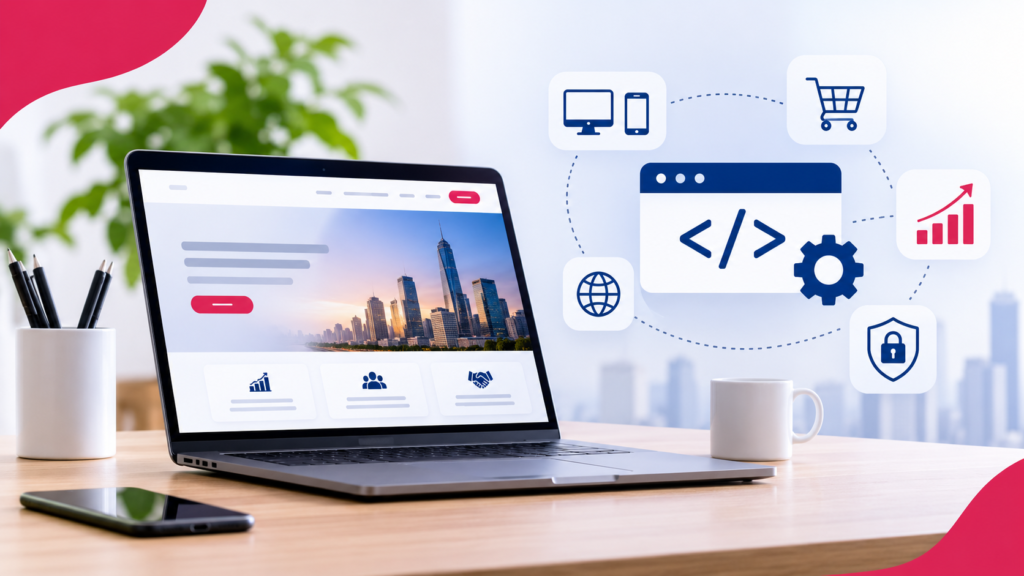
Website development is the process of planning, designing, building and maintaining a website. It has two parts:
- Front-end development: everything visitors see and click, such as layout, colours, images, menus and buttons.
- Back-end development: everything working behind the scenes, such as databases, forms, payment systems, security and the admin panel where you update your content.
Good website design and development bring both parts together, so the site looks great and works smoothly.
Why Does Your Business Need a Professional Website?
- It builds trust. People judge a business within seconds of landing on its site. A clean, professional website tells them you’re serious and reliable.
- It’s open 24/7. Customers can learn about your services, see your work and contact you at any time.
- It supports all your marketing. Your social media posts, Google Ads and SEO all send people to one place, your website. If it doesn’t convert, the rest of your marketing works harder for less.
- You own it. Social media platforms can change their rules or reach overnight. Your website is yours.
- It helps you get found. A well-built website is the base for ranking on Google when people search for what you offer.
Types of Website Development for Business
Business or corporate website: the most common type, showing your services, team, portfolio and contact details. Ideal for agencies, clinics, consultants, schools and service companies.
E-commerce website: an online store with product pages, cart, secure payments and order management. Right if you sell products directly to customers.
Landing page: a single focused page built for one goal, such as collecting leads from an ad campaign. These usually convert better than sending ad traffic to a general homepage.
Portfolio or personal website: a showcase for professionals, creators and founders who want to build their personal brand.
WordPress website: WordPress powers a huge share of websites because it’s flexible, easy to update and SEO-friendly. WordPress website development suits most small and medium businesses.
The Website Development Process, Step by Step
- Discovery and planning. We start by understanding your business, your audience, your competitors and your goals. What should the website achieve: more calls, more sales or more bookings?
- Structure and wireframes. We map out the pages and how visitors will move through them, so finding information feels effortless.
- UI/UX design. This is where your brand comes to life, with layouts, colours, fonts and imagery that match your identity and guide visitors towards taking action.
- Development. The approved design is turned into a working website, built to be fast, secure and mobile-friendly.
- Content and SEO setup. We add well-written content, optimise page titles, descriptions and images, and set up the technical basics so Google can understand your site.
- Testing. We check every page, form and button on different phones, tablets and browsers, and test the loading speed.
- Launch and ongoing support. After going live, regular updates, backups and security checks keep the website healthy. Website maintenance matters as much as the build itself.
What Affects the Cost of Website Development?
There’s no single price, because every project is different. The main factors are:
- The number of pages and the complexity of the design
- Whether you need an online store, booking system or payment gateway
- Custom features and integrations (CRM, WhatsApp, email tools)
- Content creation, such as copywriting, photos and videos
- The platform used (WordPress, custom code and so on)
- Ongoing maintenance and support
Be careful with very cheap offers. A low-cost site built from a pre-made template with no strategy often needs to be rebuilt within a year or two, which ends up costing more. A good agency will give you a clear quote after understanding your needs.
Features Every Business Website Should Have
- Mobile-friendly design. Most visitors will see your site on a phone.
- Fast loading speed. If a page takes too long, people leave.
- Clear call-to-action buttons. “Call Now”, “Get a Quote” and “Book a Consultation” should be easy to spot.
- Easy navigation. Visitors should find what they need in two or three clicks.
- SEO-friendly structure. Proper headings, clean URLs and optimised images.
- WhatsApp and contact integration. Many customers prefer messaging to filling forms.
- SSL security. The padlock sign shows your site is secure.
- Testimonials and case studies. Real proof helps new visitors trust you.
Common Website Mistakes to Avoid
- Starting to design before deciding the goal of the website
- Stuffing the homepage with too much text and too many images
- Ignoring mobile users
- Having no clear call to action
- Using stock photos everywhere instead of real images of your work
- Forgetting SEO until after the launch
- Never updating the site after it goes live
How to Choose the Right Website Development Company
- Look at their past work. Do the websites look good, load fast and work well on mobile?
- Check that they understand marketing. A website should be built to bring in business, not just to look pretty. An agency that also handles SEO, ads and content will build with that in mind.
- Ask about support. Who will fix issues and update the site after launch?
- Ask about timelines and communication. A good team explains the process clearly and keeps you informed.
- Choose a team you can meet. If you’re in Trivandrum or Calicut, working with a local team makes discussions, feedback and reviews much easier.
How DOCK Social Can Help
At DOCK Social, we don’t treat a website as a standalone project. We build business websites, e-commerce stores, landing pages and WordPress sites that are designed around your brand and made to turn visitors into customers. With teams in Trivandrum and Calicut, we also connect your website with SEO, performance marketing and social media, so every part of your digital presence works together.
Frequently Asked Questions